AtmosZero is decarbonizing industrial process heat—responsible for an estimated 10% of global CO2 emissions and significant air pollution—by replacing fossil-fuel-fired boilers with high-temperature industrial heat pump boilers.
Traditional boilers burn coal, oil, or natural gas to generate heat up to and beyond 1,400°C, emitting CO2, SO₂, NOx, and particulate matter. While electric resistive boilers exist as a zero on-site emissions alternative, they have struggled to compete economically because they convert electricity to heat at a 1:1 ratio, making them expensive where electricity prices are high relative to fossil fuels.
AtmosZero’s solution is an electrified heat pump boiler capable of delivering process heat up to 200°C, which covers a large share of industrial demand, including food and beverage processing, pulp and paper, and many chemical processes. Heat pumps move heat rather than generate it directly, similar to a refrigerator or air conditioner operating in reverse. This allows AtmosZero’s system to achieve up to roughly double the energy efficiency of electric resistive boilers, making it cost-competitive with natural gas in many settings.
Unlike many existing industrial heat pumps that are custom-engineered to use site-specific waste heat, AtmosZero’s technology is designed as a standardized, mass-manufacturable, drop-in replacement for conventional gas boilers and can operate using ambient air as the heat source. This design choice removes the need for complex integration with existing waste heat streams and enables faster, more scalable deployment across diverse industrial facilities.
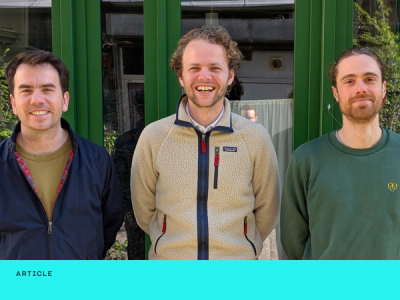
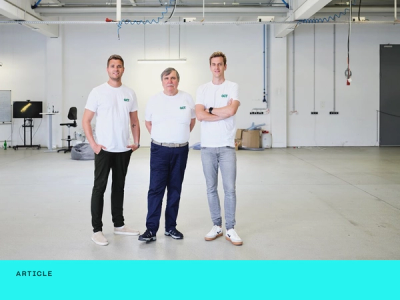
The company’s strong founding team—former ARPA-E fellows Addison Stark and Ashwin Salvi, together with Colorado State University mechanical engineering professor Todd Bandhauer—was a central factor in AENU’s decision to invest. Their execution capability is underscored by AtmosZero’s rapid progress: within 14 months of incorporation, they announced their first pilot project, a 650 kW heat pump boiler deployed with Danfoss to replace a natural-gas-fired boiler at New Belgium Brewing’s headquarters in Fort Collins, Colorado.
AtmosZero raised a $7.5M Seed round led by Energy Impact Partners, with participation from AENU and Starlight Ventures, positioning the company to scale its technology and accelerate the decarbonization of industrial process heat.
AtmosZero is developing an electrified heat pump boiler to decarbonize industrial process heat up to 200°C, a major source of global CO2 emissions and air pollution currently dominated by fossil-fuel-fired boilers. By using heat pump technology instead of electric resistance, AtmosZero can achieve up to twice the energy efficiency, making it cost-competitive with natural gas while eliminating combustion-related pollutants like SO₂, NOₓ, and particulate matter.
Unlike many existing industrial heat pumps that rely on site-specific waste heat and bespoke engineering, AtmosZero’s system is designed as a standardized, mass-manufacturable, drop-in replacement that uses ambient air as the heat source. This enables broader, faster deployment across sectors such as food and beverage, pulp and paper, and various chemical processes that operate below 200°C.
The company was founded by a strong technical team: former ARPA-E fellows Addison Stark and Ashwin Salvi, together with Colorado State University mechanical engineering professor Todd Bandhauer. Their execution capability is underscored by AtmosZero’s rapid progress: within 14 months of incorporation, they announced a 650 kW pilot project with Danfoss at New Belgium Brewing’s headquarters in Fort Collins, Colorado, where their heat pump boiler will replace a natural-gas-fired boiler and demonstrate low-carbon steam generation in a real industrial setting.
AtmosZero has raised a $7.5M Seed round led by Energy Impact Partners, with participation from AENU and Starlight Ventures, to scale this technology and accelerate the decarbonization of industrial steam and process heat.