In April 2025, the largest planned onshore wind farm in France was annulled by a court of appeal in Nancy.
Mont des Quatre Faux was 63 turbines, 226 megawatts, on the plateau of the Ardennes. EDF Renewables and its co-developer Renner had been working on it since 2014. Prefectural authorization came in 2017. The developers saw off a residents’ challenge in 2020, secured a regularization in 2022, and got a modified permit in 2023. The Nancy court threw all of it out, on the grounds that the turbines would visually saturate the surrounding villages in ways no relief, vegetation, or mitigation could mask. More than a decade of development, sunk.
For two decades, the energy transition was a hardware problem. We needed cheaper panels, cheaper turbines, cheaper batteries, and we solved it. PV module prices are down more than 90% since 2010¹, and the bottleneck has moved somewhere harder to optimize: the slow, politically exposed work of getting projects from a site to an operating asset.
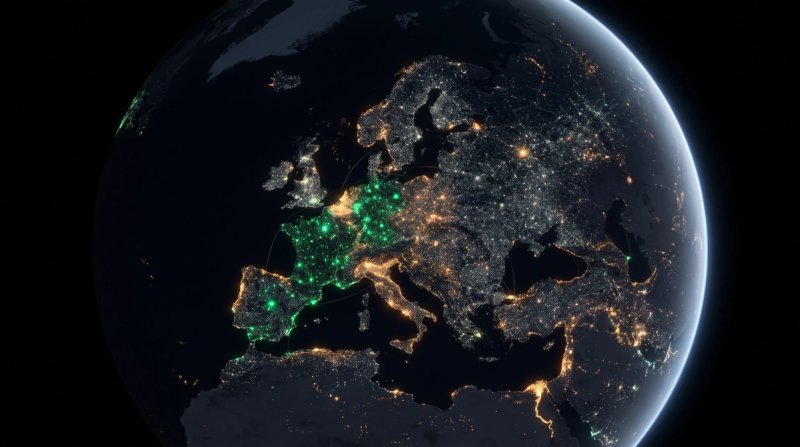
By May 2025, more than 1,700 gigawatts of renewable and hybrid projects were sitting in European grid connection queues, over three times what the EU needs to hit its 2030 targets.² French onshore wind permits run six to eight years on average.³ In Galicia, 72 wind farms representing roughly 2 gigawatts of investment were suspended at one point by a single legal doctrine running through the regional courts.⁴ In August 2024, an anonymous Saxony developer told Reuters they now screen new sites by how strongly the AfD is polling locally.⁵
Plume goes after that layer. Site-selection software already covers grid topology, zoning, and irradiance. The harder part is the unstructured paper trail around a site: council voting records, permit objection histories, regional plan amendments, environmental authority opinions, local press. Those documents sit in a different format and language in every jurisdiction. No competitor has managed to extract them at scale across borders.
A first generation of tools already proved this market is real: PVcase and Glint Solar both built software developers rely on for solar design, feasibility and shortlisting. But they approach the problem engineering-first, from the CAD and design layer, and design is the part that has already been commoditized. A perfect layout on the wrong site is worthless. Plume starts one step earlier, at the site itself, and reads the unstructured paper trail the design-led incumbents don’t touch. That sequencing is why we think Plume is set up to win the category rather than take a slice of it.
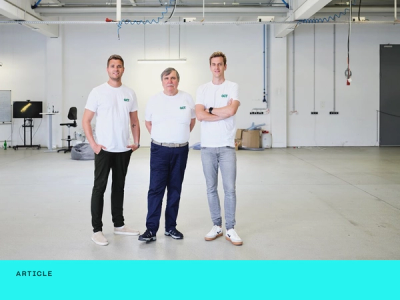
Edouard Labarthe and Marc Watine met at university and started Plume in summer 2024. Previously Edouard ran the largest energy customer account at Palantir; Marc built methane-leakage geospatial software at Kayrros. They have a perfect founder-product-market fit for a problem that is, at heart, messy-data extraction.
We first came across Edouard and Marc days before their 2024 YC demo day. We had been running a scraper over the YC batch filtered for energy and climate tech, and Plume stood out. We stayed close to Ed and Marc for more than a year before we led their seed round in early 2026. Today, Plume has more than a dozen enterprise customers and has stayed net positive while growing.
Site selection is the wedge, but the real bet is on everything that comes after it. A developer who shortlists a site still has to design it, run feasibility, permit it, and connect it to the grid, usually across a whole portfolio of projects at once, over a span of years. Permitting alone takes two to four years, and the constraints keep shifting the whole way through. Plume wants to be the system of record for renewables development, and that position compounds: the deeper a developer's projects sit in the workflow, the more expensive it becomes to leave, and the data flowing through it isn't available anywhere else.
We led the round on a simple bet, a large and urgent market meeting a team built precisely for it. Six months of working with Edouard and Marc have only deepened our conviction that Plume will become the layer European renewables runs on.
Sources
¹ NREL, “U.S. Solar Photovoltaic System and Energy Storage Cost Benchmarks” (Q1 2024).
² Beyond Fossil Fuels, E3G, Ember, IEEFA, “How Europe’s Grid Operators Are Preparing for the Energy Transition” (May 2025).
³ WindEurope, “French ambitions for onshore wind toothless without urgent action from Government on permitting” (December 2018).
⁴ Reuters, “How a storm of suits paralysed wind mills in northwest Spain” (January 2025), via OE Digital; figures originally from AEE, the Spanish Wind Energy Association.
⁵ Reuters, “Germany’s far right targets renewable energy in bid for first election wins” (28 August 2024), via VOA News.