Making Impact Legible Without Selling It Short
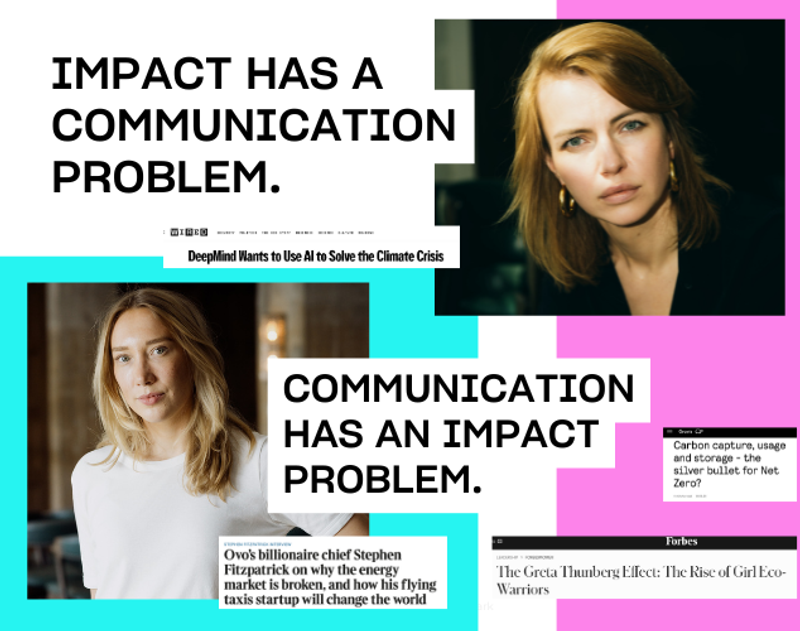
Impact has a communication problem. Communication has an impact problem. In between sits the thing that makes or breaks climate and impact capital: trust.
At AENU, we live inside that tension. Our Impact team works in a world of nuance, uncertainty, and long time horizons. Our Communications team works in a world that demands clarity, speed, and simplicity. When those worlds collide, we don’t aim for the neatest story. We aim for the truest one.
We’ve seen what happens when this goes wrong:
- Impact gets flattened into PR.
- Metrics become empty signals.
- Stories create expectations that can’t survive scrutiny.
In a field where outcomes play out over decades and evidence is always partial, clarity without context is dangerous. People don’t lose trust because they dislike your message. They lose trust when they sense something is missing.
That’s why we treat communication not as a performance layer, but as a strategic risk surface—and a source of leverage. Every claim we make has to answer three questions:
- Will this survive critical scrutiny?
- Would we stand by it in a negotiation with an LP or a founder?
- Is it anchored in something testable, not just aspirational?
If the answer is no, we rewrite. If it’s yes, we keep going—and proactively surface the next hard question.
A 3-Layer Filter for Impact Claims
Over the past year, we’ve built an internal system to pressure-test our messaging. It’s not about branding. It’s about resilience.
For every impact statement, we move through three layers:
1. Signal
The immediate association a number or statement triggers.
Example: “47% of leadership identifies as non-male.”
Signal: Diversity.
2. Interpretation
The intended meaning behind that signal.
Interpretation: Inclusive leadership and systemic bias mitigation.
3. Anchor
What backs this up in real-world structures, decisions, or outcomes.
Anchor: Hiring data, decision-making roles, promotion history, internal policy.
We apply this filter across LP materials, founder updates, hiring pages, impact reports, and press outreach. It slows us down—and makes our communication more durable.
Why This Matters Now
Trust in climate and impact capital is fragile. LPs are increasingly skeptical of ESG theater. Founders are tired of storytelling that doesn’t show up in term sheets or board meetings. Journalists have seen enough overclaims to last a lifetime.
Our job as a fund is not only to help create impact—it’s to make that impact legible without stripping away its complexity. And to do it in a way that still holds up five years from now, not just in the next news cycle or fundraising round.
Principles We Operate By
There is no universal impact narrative. But a few principles consistently raise the bar:
- Be explicit about trade-offs. Every simplification leaves something out. Naming what’s missing builds credibility.
- Don’t hide limitations. Admitting what we can’t prove often strengthens what we can.
- Expect intelligent skepticism. We write as if our audience is smarter than we are—because often, they are.
- Build for interrogation. If a story can’t survive tough questions, it’s not ready to be public.
Where We’re Going Next
This is the first in a series on how AENU approaches impact communication as an internal discipline, not a branding exercise. In the coming pieces, we’ll share:
- How we pressure-test claims in LP decks and investment memos
- What we’ve learned from high-friction debates with founders
- Where impact and communication diverge—and how we manage that divergence in practice
If we want the field to mature, we can’t just raise the bar on capital. We have to raise the bar on language.
Let’s not just make impact work. Let’s make it legible—without selling it short.